
Gove Released Mugshot Record Rules
A booking photograph records appearance during a specific booking. It is not a finding of guilt, a current-custody marker, or a release certificate. Kansas law treats sources differently. K.S.A. 45-217 excludes jail rosters from the definition of criminal-investigation records, but that does not open every file attached to a roster entry.
The Kansas Attorney General KORA FAQ says mugshots and standard arrest reports may be discretionarily closed. An agency may release a county arrest photo, yet Kansas law does not require the same result in every request. KDOC photographs have a different rule because K.S.A. 45-221(a)(29) lists the correctional photograph among discloseable fields.
Public viewing also does not grant unrestricted reuse rights. Gove Sheriff restricts redistribution of site photographs. Save the source, date observed, booking number, and agency label so the image is not separated from its real context.
Find Gove Released Inmate Mugshots
Gove’s contract-housing system creates a divided photo trail. Gove may hold the arrest or booking record, while Trego or Thomas may hold the jail-management image. A later KDOC photo belongs to state corrections and may not be the same image. Match both the person and booking before treating any picture as responsive.
| Channel | Photo? | How to access |
|---|---|---|
| Thomas County current roster | Yes, while listed | Search by name or booking number and note a Gove hold |
| Trego and Gove official web | No released archive found | Request the exact booking photo from the custodian |
| Gove records request | Possible, discretionary | Supply booking number, date, and physical host |
| KASPER | State corrections photo | Search a qualifying KDOC record and label it correctly |
| KBI registry | Current registry photo for covered people | Use only when a public registration duty exists |
| VINELink | Only if the feeder supplies it | Do not promise a photo or treat it as a gallery |
| BOP and ICE locators | No booking-photo service | Use them for custody status, not photos |
The official Thomas County jail roster shows the kind of host fields and photograph available during current custody.
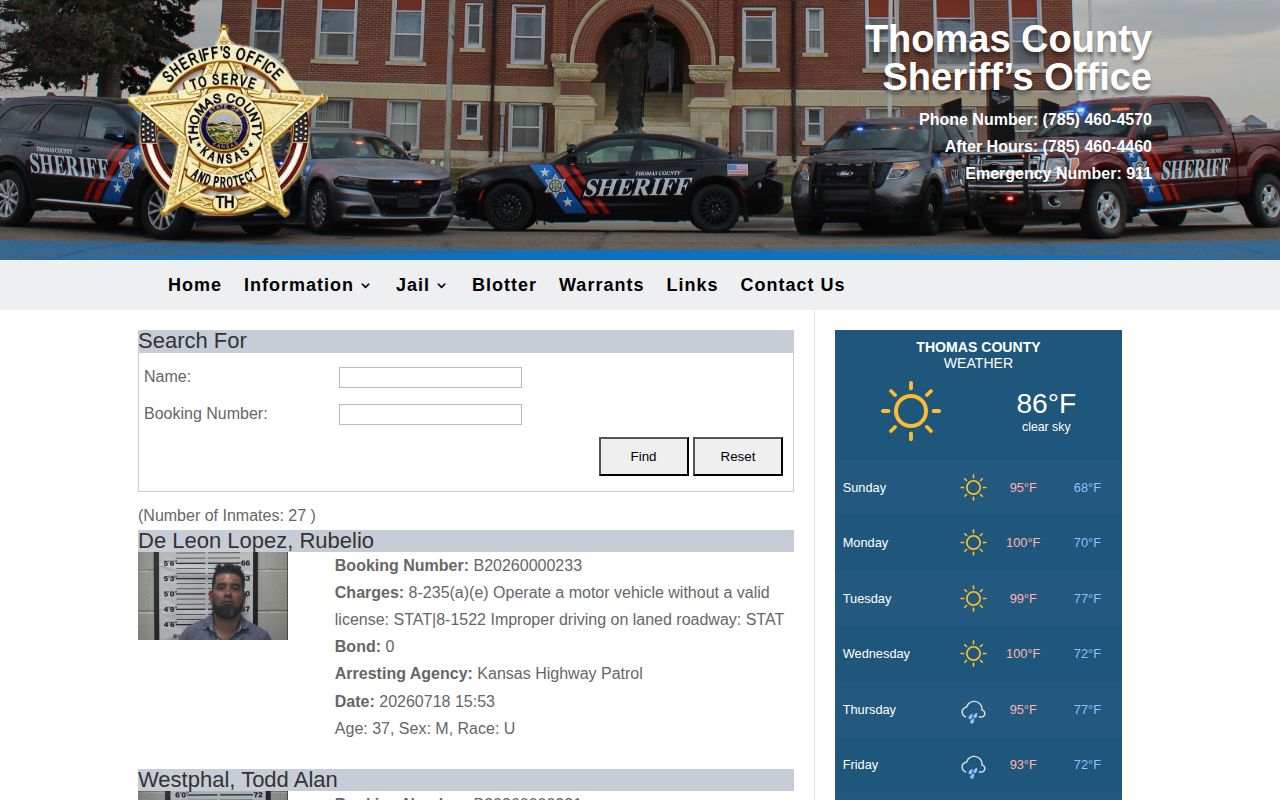
Once the entry leaves that live roster, call Thomas to distinguish community release from transfer and request the historical image by booking.
Gove Mugshots Without an App
Gove Sheriff’s official site map shows no local roster, recent-release photo feed, or linked sheriff mobile app. Do not infer that an app exists from another Kansas county’s service. Gove links alerts, press releases, Facebook, and Most Wanted. Those channels may preserve an individual agency image, but none is a complete booking-photo archive.
Most Wanted is especially easy to misread. A wanted image does not mean the person was booked, released, placed on parole, or discharged. Gove’s own disclaimer warns that information and images can contain errors. Check the publication date and caption, then seek the booking and custody event from Gove and the physical host.
The Gove County 24-hour release page explains why neither host’s current roster can be converted into a verified released list. The same rule applies to photos: disappearance from a live display does not establish the exit event.
Request Gove County Booking Photos
Gove posts no dedicated KORA form, fixed fee schedule, retention term, or promised completion time. Use the Gove Sheriff contact route, call 785-938-2250, or visit 420 Broad Street during administrative hours. Because record custody may be split, route the same focused request to the named host.
- Identify the person, booking date range, booking number if known, arresting agency, and whether Trego or Thomas physically held the person.
- Request the booking photograph tied to that exact booking. Ask for electronic delivery and any existing photo metadata that identifies the booking.
- Ask Gove and the host which office is custodian if either does not hold the image. Do not ask an agency to create a new photo record.
- Request an advance fee estimate. Kansas permits reasonable actual access, copy, and staff costs, but Gove publishes no set schedule.
- If material is withheld, ask for the exact statutory basis and all reasonably segregable public portions.
KORA generally calls for a response within three business days. That response may produce records, explain a delay, or deny access with a legal basis. It is not a guaranteed completion deadline. A focused request gives the custodian a better chance to locate the right image without confusing separate bookings.
Gove Photo Leads After Release
KASPER may display a photograph when a Gove case led to KDOC custody. Search through the official KASPER disclaimer, compare the KDOC number and case, and label the result as a state correctional photo. The database date may not be the date the image was taken. Report an incorrect KASPER image or identity link to kdoc_pub@ks.gov.
The KBI registered-offender search has a current photograph only for people subject to public registration. It is not a universal release-photo database. The official interface is shown below.
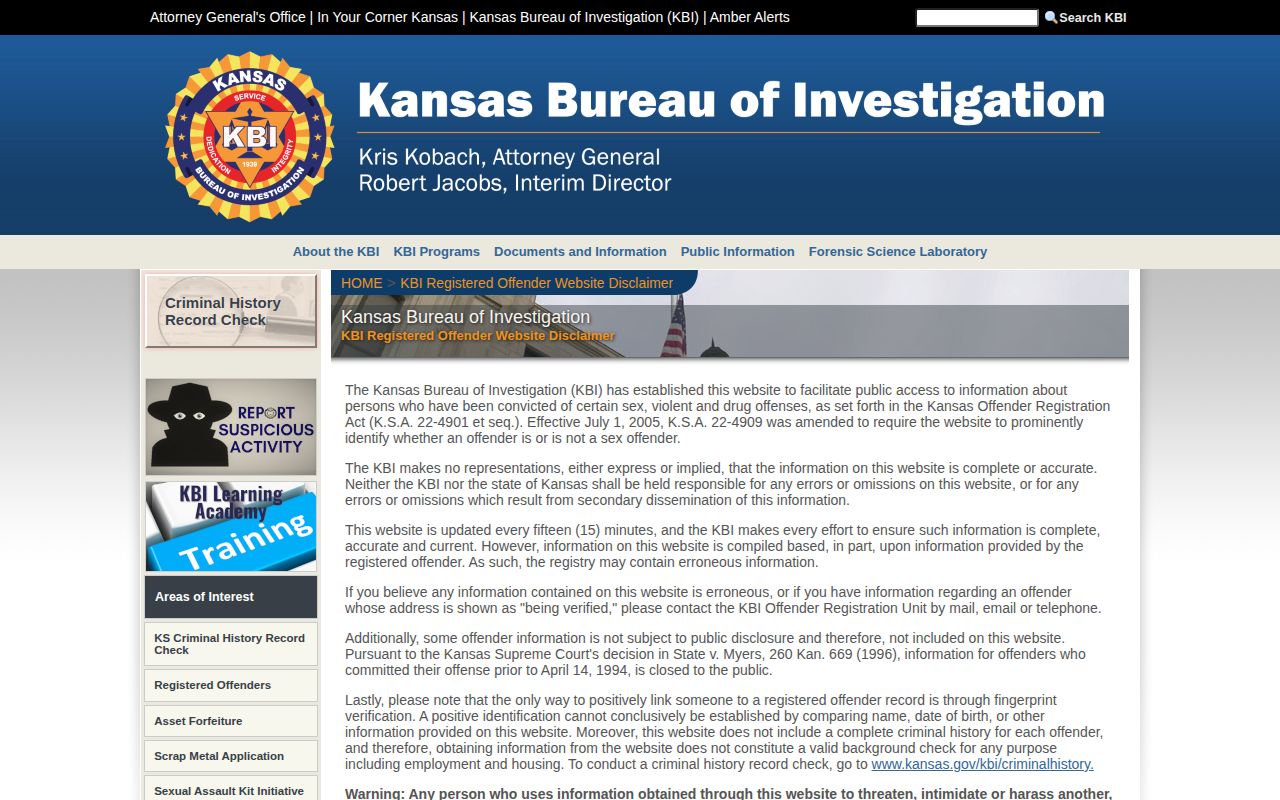
Call it a registry photo, not a mugshot or release photo, unless the source itself proves that label.
Commercial photo aggregators can retain old or mismatched images. They are at most a lead, receive no official endorsement, and cannot confirm release. Reputable news or an official sheriff press release may preserve an image and arrest date, but publication proves only what was reported then. Verify identity and present status with the originating office.
Correct Gove Released Mugshot Errors
For an incorrect local image, record the exact URL, screenshot date, name, and booking number. Contact Gove and the host that published or holds the record. Explain the mismatch and provide the correct official reference. If access is denied or an error remains, ask for the office’s written correction or review process. A public image should never be detached from its agency, booking, and date.
Expungement is a court order that limits disclosure under Kansas law. K.S.A. 21-6614 permits petitions for specified convictions, arrest records, and diversions after applicable conditions and waiting periods. Exclusions apply. Once an order is entered, custodians generally may not disclose the record except in statutory circumstances. Send the order to each source rather than assuming one correction will reach every copy.
No specific Kansas anti-pay-to-remove mugshot statute was found in the official research sweep. Do not read that narrow result as permission or prohibition under every other law, and do not rely on a removal seller. Official correction and expungement channels control the government record.
Gove Mugshot Versus KDOC Photo
A county arrest mugshot and a KDOC prison photograph are separate records with separate access rules. Kansas AG guidance says an arrest mugshot may be discretionarily closed. The Kansas correctional-record statute lists the KDOC photograph as discloseable. A requester may therefore receive the prison image even when Gove or a host declines the booking photo.
The difference matters for accuracy. A Thomas roster photo ties the image to its current booking display. A KASPER image ties it to a KDOC record but may come from a later prison intake. A registry image reflects a current statutory registry field. None should be relabeled merely because the same person appears in several systems.
Identity checks should use more than facial resemblance. Compare the full name, date of birth when lawfully shown, booking or KDOC number, case number, source agency, and publication date. Similar names and old photos can mislead. If two official sources disagree, ask each custodian which event and record its image represents rather than choosing the more recent-looking photograph.
A Thomas entry may say “Housing for Other: Gove County Sheriff's Office.” That text identifies contract custody, not a Gove-owned jail. It also does not mean Thomas created every arrest record. Requesting from both agencies is reasonable because Gove may own the arrest material while Thomas owns the jail intake image and roster entry.
Gove press releases, alerts, and Facebook posts can remain after a live roster changes. Each is selective. An agency announcement may establish that a photo was published in connection with an event, but not that the person was later released. Check the court disposition and host custody record before adding a release label to any archived image.
For a photo found in news coverage, preserve the article date and distinguish an agency-supplied image from a file photo or courtroom image. A report of an arrest is not proof of conviction. A report about sentencing is not proof that jail processing ended. Current status must come from the current responsible system.
A photo can also remain after a record is sealed or expunged because copies may have moved beyond the original custodian before the order. Start with the official agency and provide the court order where applicable. Then contact each separate publisher through its correction process. Do not assume that removing a roster entry will remove an agency post, news copy, search cache, or a later KDOC photograph that belongs to another record system.
Note: BOP’s locator has no photo, ICE’s locator is not a mugshot service, and VINELink shows an image only when its feeder supplies one.